The cello
Carbon fiber cello
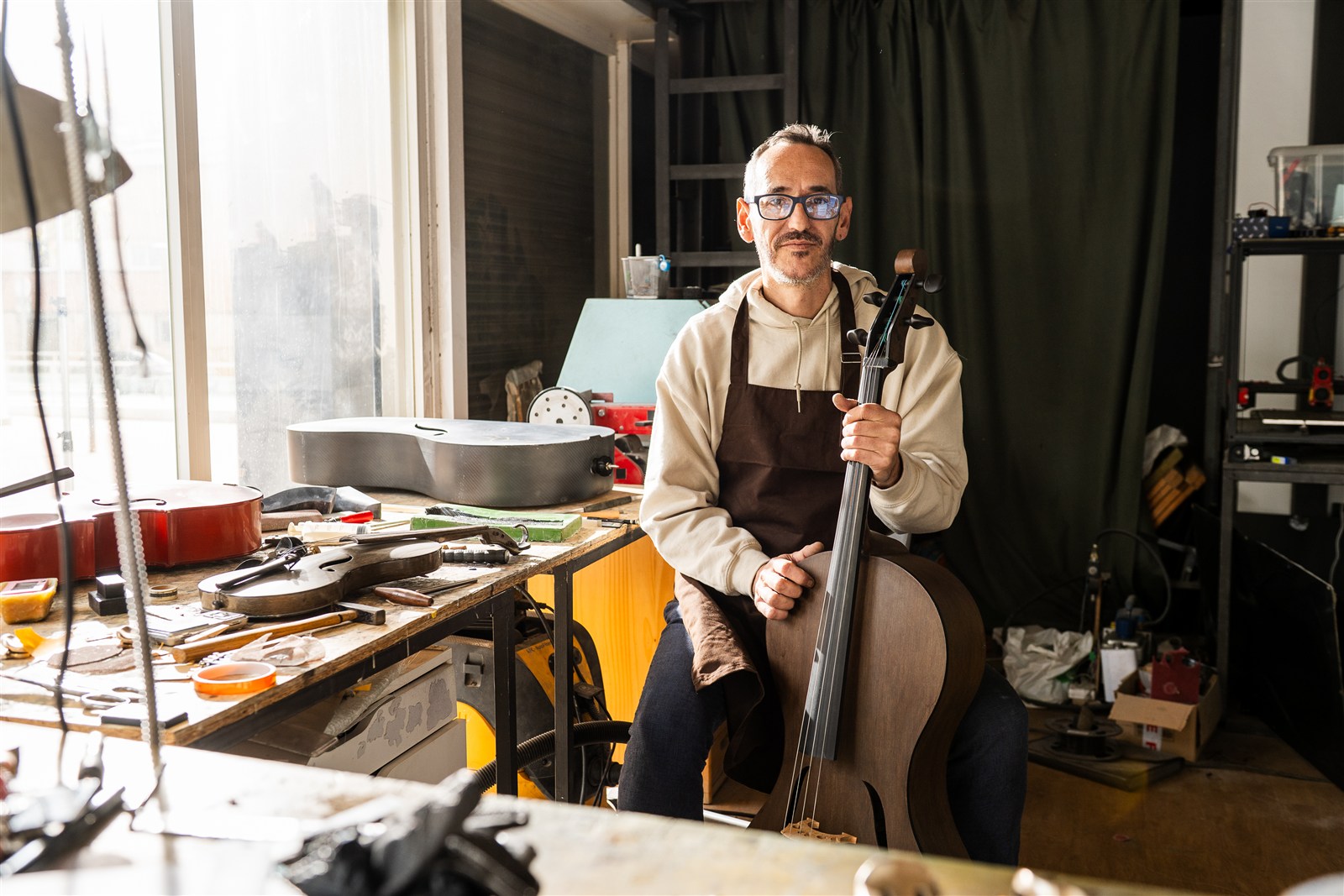
A cello built in carbon fiber and flax, one at a time, in Terrassa. Made for you, not for stock.
From 6.000 € · four months · set-up for life
The specification
The numbers.
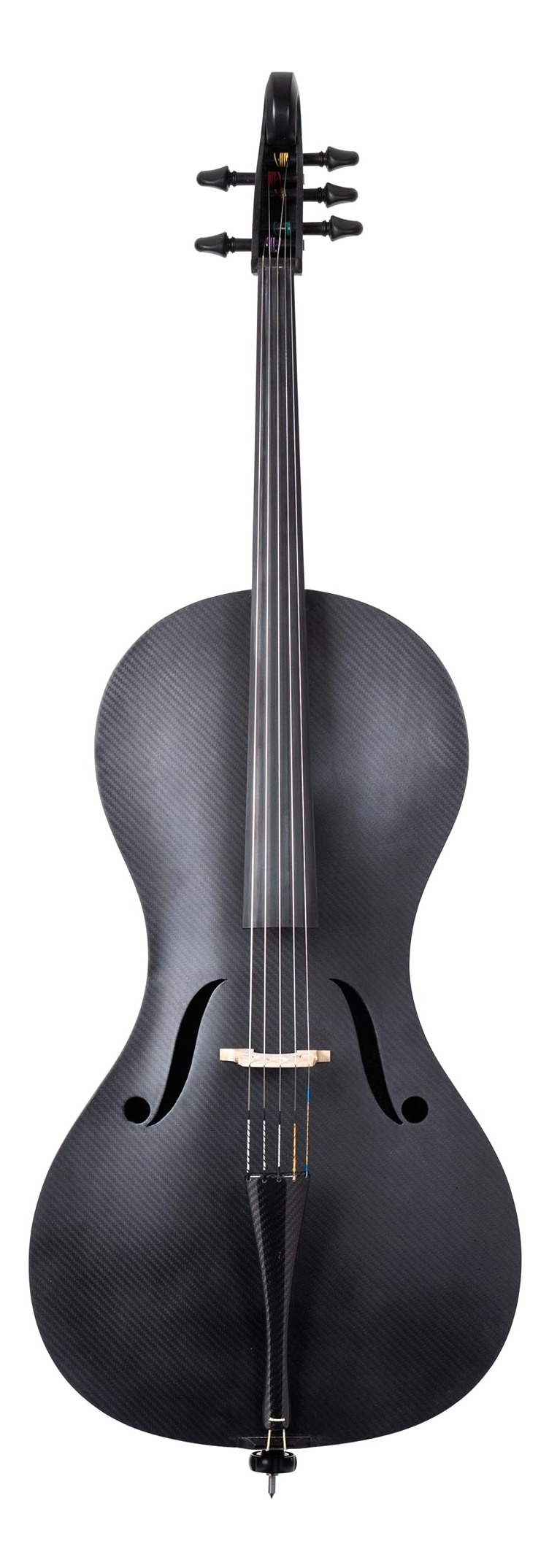
| Body length | 750 mm |
|---|---|
| String length | 695 mm |
| Body | Carbon fiber and flax |
| Bass bar | Carbon |
| Fingerboard | Ebony or Corène |
| Pegs | Mechanical |
| Endpin | Carbon, Bender screw |
| Strings | D’Addario Kaplan |
| Finish | Carbon or flax, matte or gloss |
| Delivery | Four months from the approved specification |
| Set-up | Included, for life |
| Price | 6.000 € – 8.000 €, according to specification |
Why composite
What it solves. And what it is not.
It stays in tune
It holds its tuning when the weather changes, and it does not need hours, or days, to get used to new conditions.
It does not crack with the weather
No winter cracks, no woodworm, no museum. But it is not a case: I build for lightness — a light body is efficient. It answers fast, moves freely, and asks less of the player. Light is not a compromise; it is the sound. Against a knock, though, it is as fragile as spruce.
It is not a wooden cello
It does not sound like an eighteenth-century instrument, and it is not meant to. It has its own voice.
The options
Four strings, or five.
Four strings
The standard instrument.
Five strings
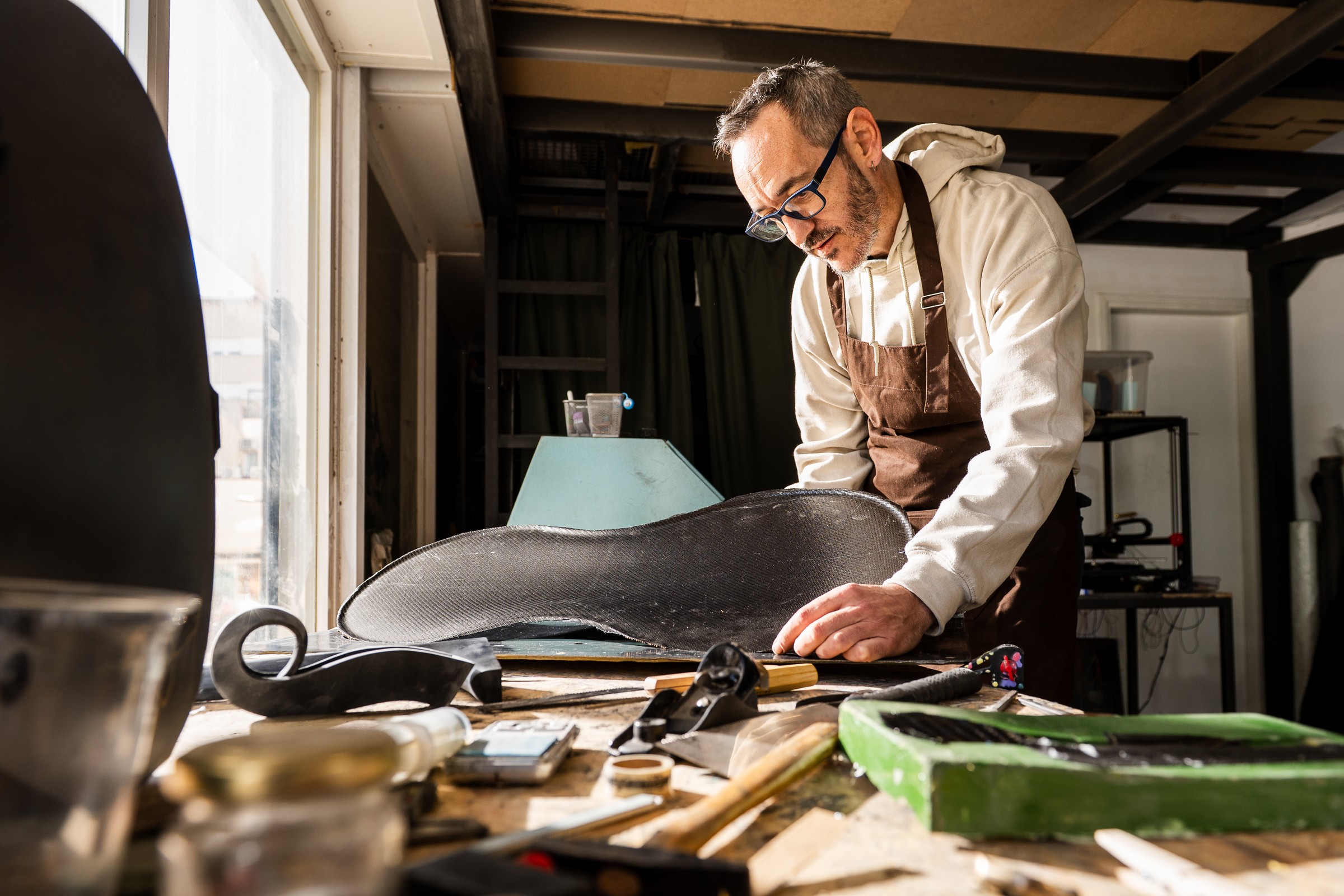
With the extra string you want, low or high. Ask me for the specification and the price.
The finish
Carbon or flax, matte or gloss. If you want the flax to show in the body, it shows. If you want carbon, it does not have to show at all.
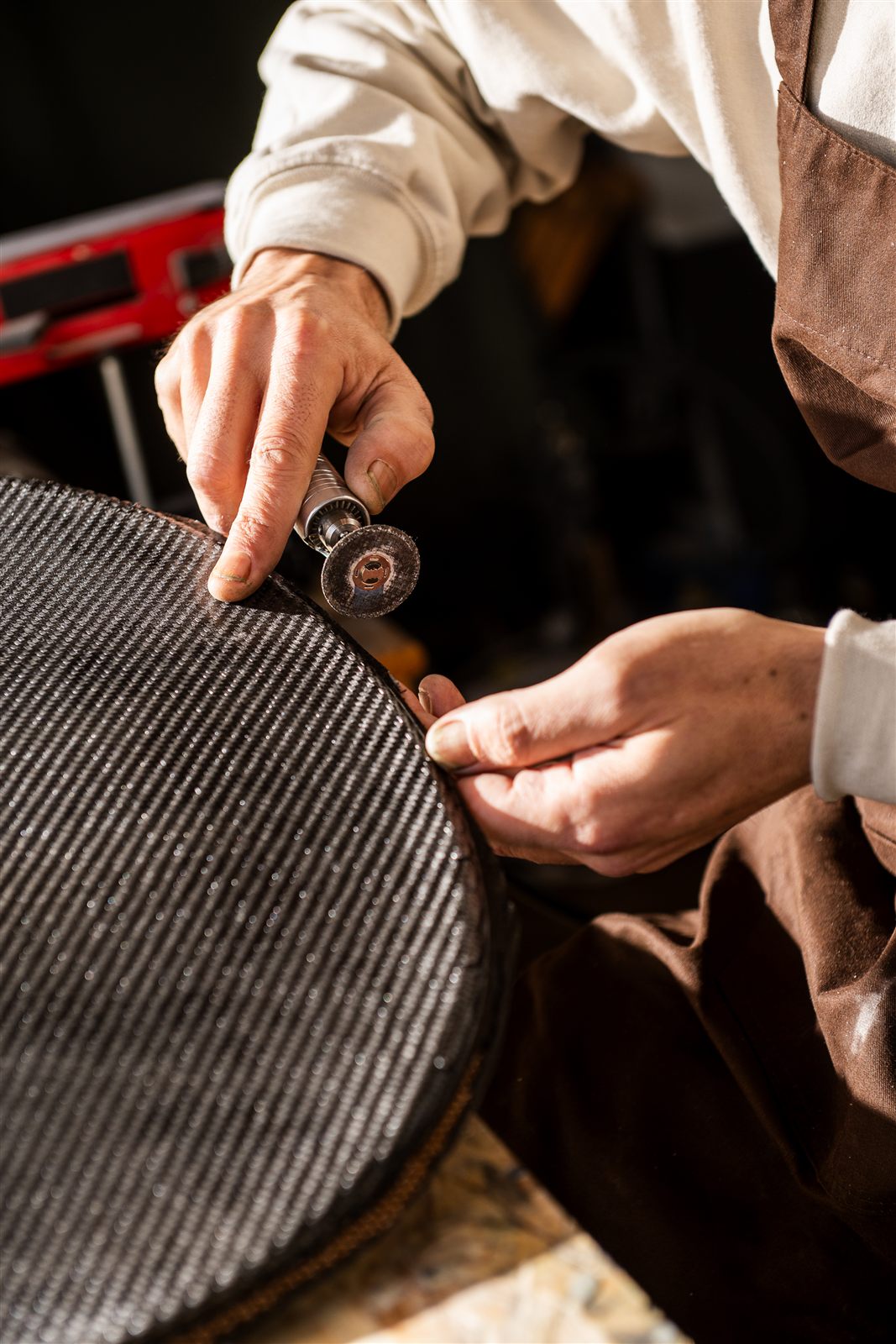
Part by part
What it is made of.
It is built to the proportions of the traditional cello, without the corners on the bouts. Each part is measured before it goes in — technically and acoustically. Touch a point.
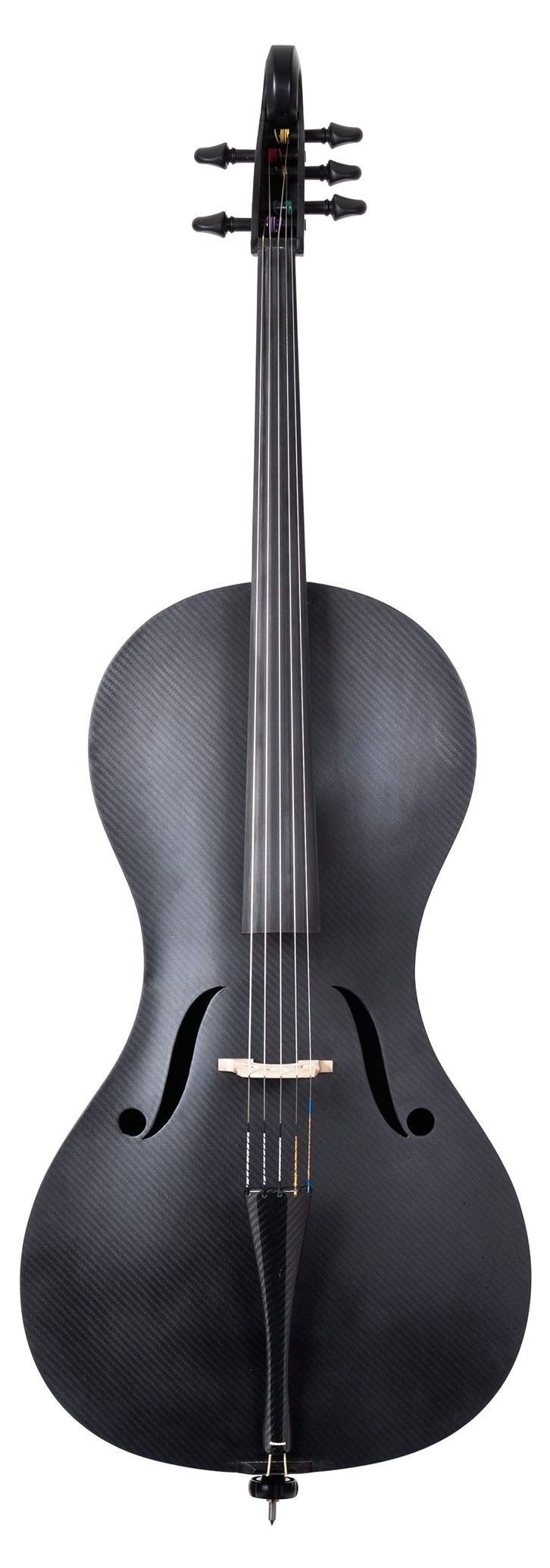
Touch any point on the instrument. Each one tells you what that part is, and why it is made the way it is.
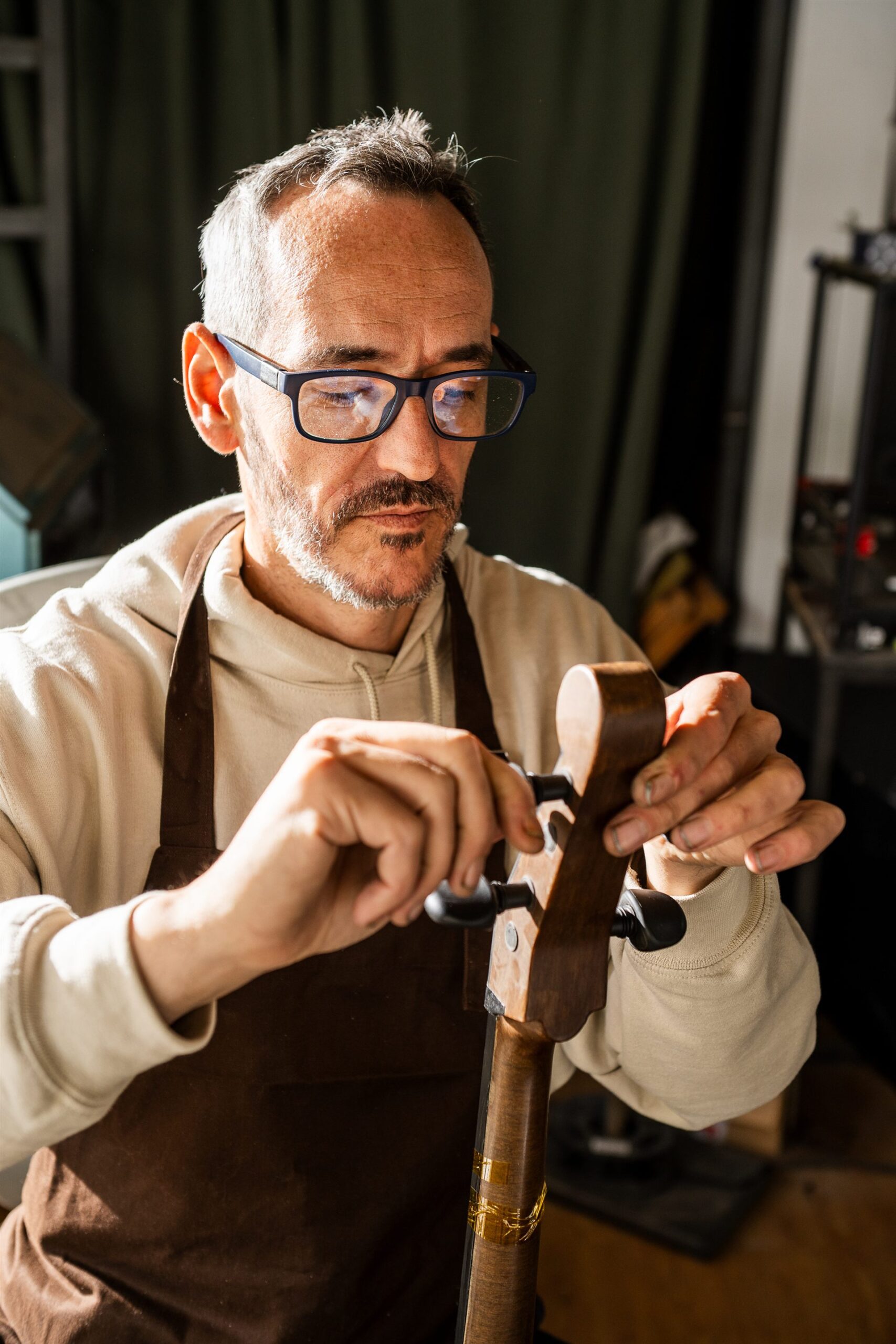
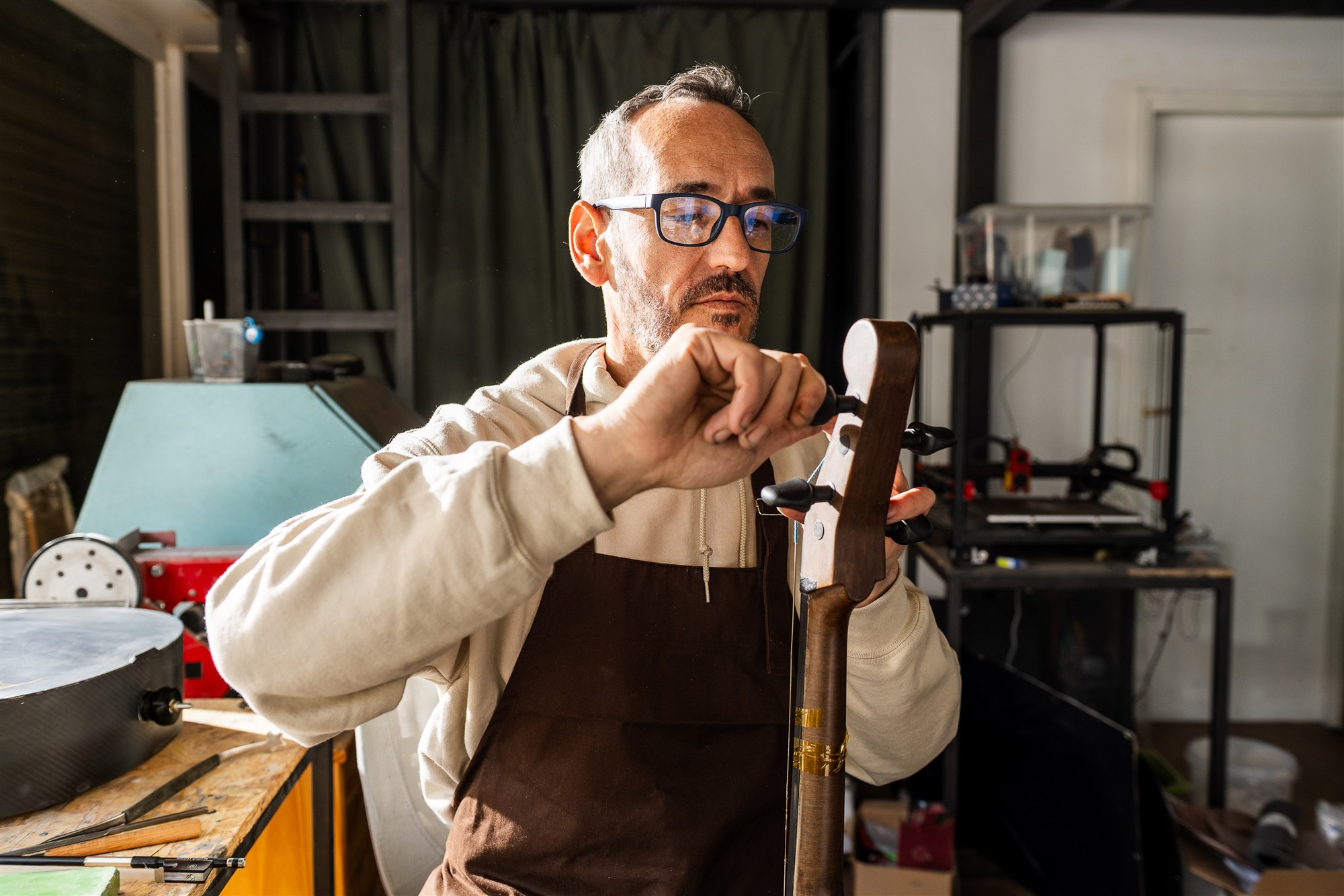
Mechanical pegs.
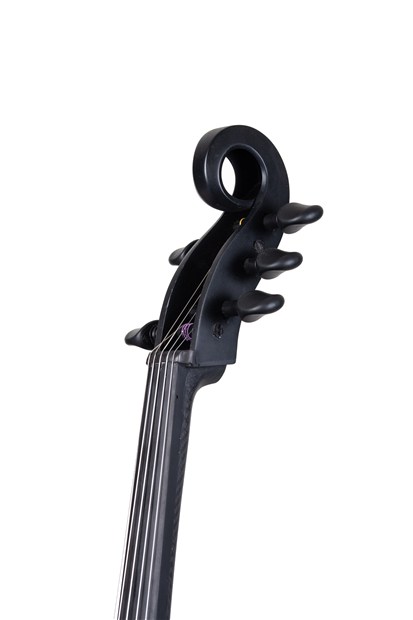
It tunes exactly, with two fingers and no force — and once it is tuned, it stays there. Friction pegs are stiff enough to leave your wrist sore at the end of a concert, and they slip in the middle of one. I played early music for years without fine tuners; the day I tried a mechanical peg, I saw the light.
The fingerboard.
Corène — a composite fingerboard by a Swiss workshop, Néo-Ébène: deep black through and through, with a geometry that does not move, and made without protected ebony. Or ebony itself, if you prefer the wood.
Where the neck meets the body.
Every string pulls on this joint. It is fitted so that the pressure lands where the body can take it.
The body.
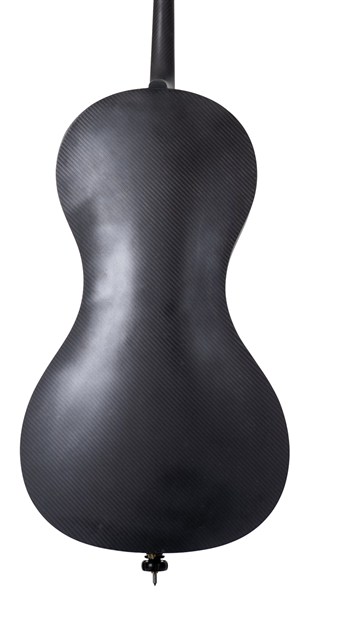
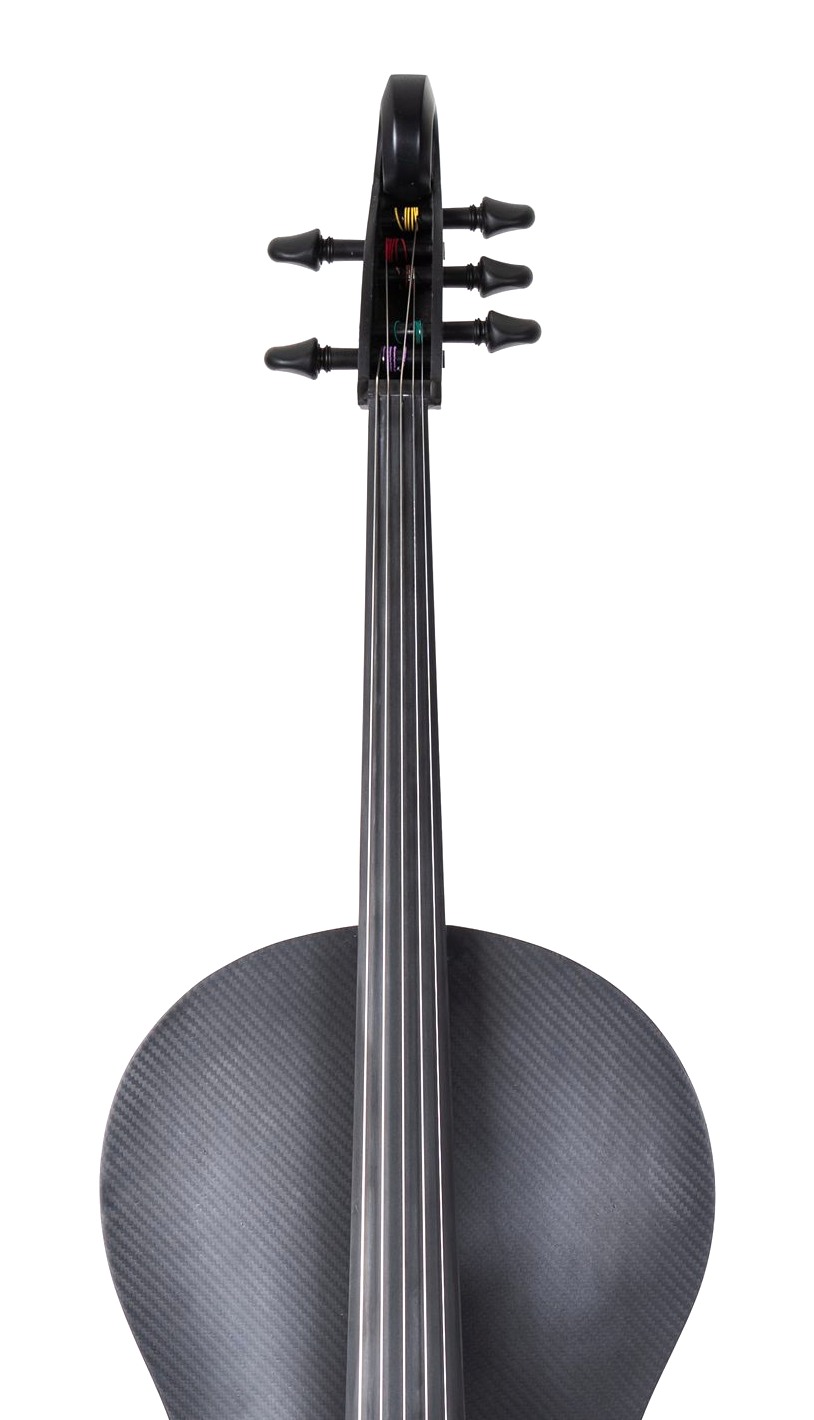
Carbon fiber for power, flax for warmth. Both are laid up by hand and cured in the workshop.
What is inside.
The soundpost is spruce, cut for the instrument it goes into. The bass bar is carbon: it does not move with the weather, so the fit stays where it was cut.
The bridge.
Maple. Any luthier can cut, fit or replace it, because it is made the way our tools expect it to be.
The tailpiece.
Carbon, made in the workshop. It is also sold on its own, to players who want it on another cello.
The endpin.
Carbon, with a Bender screw.
The strings are D’Addario Kaplan.
The commission
How a cello is commissioned.
You write
Tell me what you play, and what you would like the instrument to do.
Twelve questions
A short questionnaire about your playing, your repertoire and your needs.
The specification
I write it down: the instrument, the finish, the price and the date.
The bench
You approve it, and the cello goes on the bench.
At the commission. The rest on delivery.
From the approved specification to the day you play it.
The set-up is included for as long as you own the instrument — the labour, not the parts.
Questions
What people ask before.
Can another luthier work on it?
Yes. The bridge, the soundpost and the set-up are made the way a luthier expects them, so another luthier can adjust, cut or replace them with their own techniques.
What is the difference from a wooden cello?
The proportions are those of a traditional cello, without the corners on the bouts. The body is light, the bass bar is carbon, the pegs are mechanical, and the material behaves differently — with weather, and with time.
How much does it cost?
From 6.000 € to 8.000 €, depending on the specification. The written quote is fixed before the instrument starts.
Does it need time to settle when the weather changes?
No. It does not need hours, or days, to get used to new conditions, and it holds its tuning.
Is it an electric cello?
No. It is an acoustic cello made of composite — the sound comes from the body, not from a pickup.
Do you make a five-string?
Yes, on request — with the extra string you want, low or high. Ask me for the specification and the price.
What happens if it cracks?
It can be repaired, as much as a wooden instrument can. Most traditional luthiers do not have the techniques for composite, though — so a repair on this instrument is a job for me.
How do I care for it?
The finish is not shellac. That means it takes cleaning products, cold, heat and humidity better than a varnished instrument — and it needs less looking after.
Do you repair other instruments?
Yes. I repair instruments — mine and other people’s.
Write to me
Tell me what you play.
The next cello is on the bench, not in a catalogue. If you are thinking about one, the first step is a conversation.